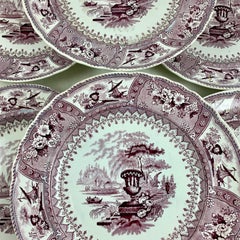
Staffordshire Dinner Plates

British

Thanks to its reserves of clay, lead, salt and coal, Staffordshire, England, has been a center for ceramics since the early 17th century. The county was home at one time to hundreds of pottery workshops and as many as 4,000 bottle-shaped kilns that operated year-round. The term “Staffordshire Potteries” refers to the industrial area of Stoke-on-Trent — comprising the towns Burslem, Fenton, Hanley, Longton, Stoke and Tunstall — where most of the production was concentrated.

In 1720, potter John Astbury discovered that he could make what would later be called creamware by adding ground flint powder to the local red clay. Because resources were so plentiful in Staffordshire, local potters could afford to experiment, working to refine their techniques and designs. One such innovator was Thomas Whieldon, an important 18th-century potter known today for his tortoiseshell ware, whose brilliant glazed surface of caramel, yellow and green hues was made with copper and manganese compounds.

Whieldon operated the Fenton Low workshop, making coffee- and teapots, dinner services and even ornamental knife hafts. He was an influential figure: Josiah Spode apprenticed at the workshop prior to opening his company in 1770, and Josiah Wedgwood partnered with Whieldon for five years before establishing his eponymous firm in 1759.

Wedgwood is perhaps the best known of the Staffordshire potters. The firm produced a line of light-colored earthenware for Queen Charlotte, who liked it so much that she granted permission to market it under the moniker Queen’s Ware, which despite the name, was designed for everyday use.

In the same regal vein, in 1773, Wedgwood created the 954-piece Frog service for Catherine the Great, of Russia. The company is also known for its black stoneware, Black Basalt, which imitates the color and shapes of Etruscan vases; Jasperware, with its classical reliefs applied on the unglazed body; and pearlware.

By the end of the 18th century, Staffordshire was the primary producer of ceramics for the American colonies, even creating patriotic wares celebrating independence for this market. The imagery on Staffordshire ceramics became more standardized during the mid-18th century with the advent of transferware, in which a design etched on a copper plate is printed on tissue paper, which is then used to transfer the wet ink onto the ceramic surface. This technique enabled artisans to decorate their wares with complex scenes that wrapped around an object’s surface and make several copies of popular patterns.

The Staffordshire potters also produced decorative figurines, such as this charming pair of cows dating from the 19th century. Particularly popular in Great Britain were pieces with hunting imagery, such as this George IV porcelain stirrup cup in the shape of a fox head wearing a gilt collar inscribed with the word “Tallyho.” Among the many whimsical vessels produced is this mid-19th-century frog mug. The exterior is painted with a charming scene of people picking fruit on one side and ladies on a garden swing on the other side, while inside a molded frog’s head at the bottom of the mug makes a gurgling sound when the beverage has been almost completely consumed.

On 1stDibs, find a range of antique ceramics from the Staffordshire Potteries including decorative objects, tea sets, dinner plates and other items.
to
3
3
1
3
2
1
3
3
3
3
3
3
3
48
102
85
79
56
Creator: Staffordshire
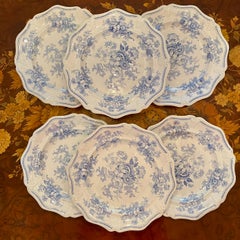
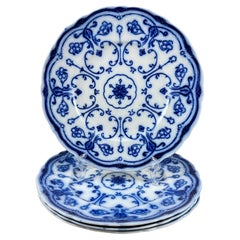
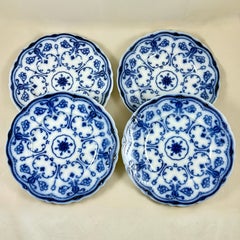
English New Wharf Pottery Conway Pattern Flow Blue Plates, circa 1890, S/4

English New Wharf Pottery Conway Pattern Flow Blue Plates, circa 1890, S/4

By Staffordshire

Located in Philadelphia, PA

A set of four English Flow Blue Plates, in the Conway pattern, by New Wharf Pottery, circa late 1880s – early 1890s. The New Wharf Pottery Company was located at Navigation Road, B...
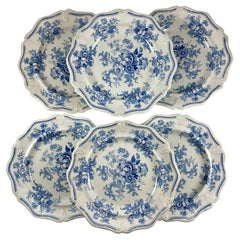
Category

1880s English High Victorian Antique Staffordshire Dinner Plates

Materials

Porcelain

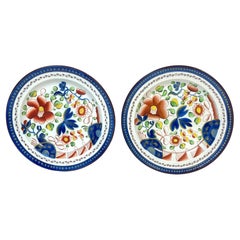
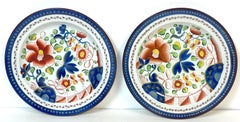
Pair of Gaudy Dutch  'Single Rose ' Pattern Plates

Pair of Gaudy Dutch 'Single Rose ' Pattern Plates

By Staffordshire

Located in West Palm Beach, FL

Pair of Gaudy Dutch 'Single Rose ' Pattern Plates 8.25 inches in diameter The 'Single Rose' pattern dates from the same period as other Gaudy Dutch patterns...

Category

19th Century English Antique Staffordshire Dinner Plates

Materials

Pottery

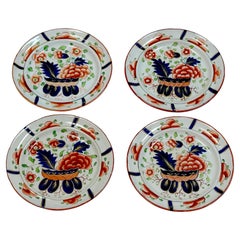
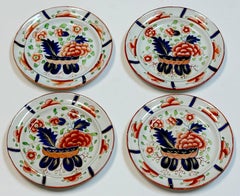
Set of Four Gaudy Dutch 'War Bonnet ' Pattern Plates

Set of Four Gaudy Dutch 'War Bonnet ' Pattern Plates

By Staffordshire

Located in West Palm Beach, FL

Four Gaudy Dutch 'War Bonnet' Pattern Plates 8.25 inches in diameter The 'War Bonnet' pattern was produced between 1810 and 1850 in England, primarily in the Staffordshire region. These plates were made for the American market, where they gained popularity among the Pennsylvania Dutch. The term 'War Bonnet' likely refers to the central design motif, which resembles a Native American war bonnet, reflecting early American cultural influences. A "war bonnet" refers to a traditional headdress worn by some Native American tribes, most notably the Plains Indians such as the Sioux, Cheyenne, and Crow. These headdresses are often made of feathers (typically eagle feathers), beads, and other decorative elements, and they carry deep cultural, spiritual, and symbolic significance. The significance of the War Bonnet Symbol of Honor: War bonnets were worn by respected leaders, warriors, and elders who had earned them through acts of bravery, leadership, or service to their community. Spiritual Importance: The feathers, especially eagle feathers, are considered sacred and represent a connection to the spiritual world. Ceremonial Use: War bonnets were used in various ceremonies, dances, and important cultural events rather than for everyday wear. Status and Achievement: Each feather in a war bonnet was typically earned for a specific act of courage or accomplishment. The 'War Bonnet' pattern features a central design resembling a feathered headdress or floral basket, surrounded by vibrant floral elements. Color Palette: Common colors include cobalt blue, iron red, and green, with occasional yellow highlights. These colors were applied using overglaze enamels. Like other Gaudy Dutch patterns...

Category

19th Century English Antique Staffordshire Dinner Plates

Materials

Pottery

Related Items
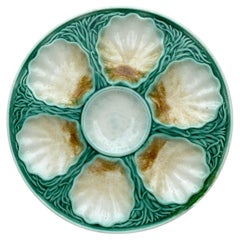
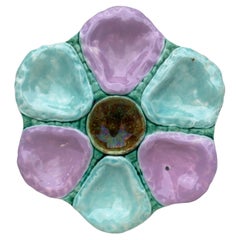
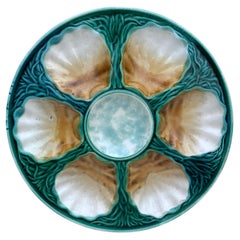
French Majolica Oyster Plate Salins, circa 1890

French Majolica Oyster Plate Salins, circa 1890

By Salins

Located in Austin, TX

French Majolica oyster plate with seaweeds Salins (East of France) circa 1890.  

Category

1890s French Victorian Antique Staffordshire Dinner Plates

Materials

Ceramic, Faience, Majolica

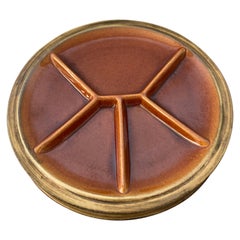
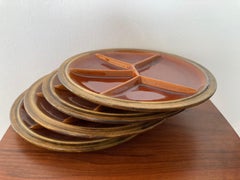
Set of Four Fondue Plates, Gien Pottery, France, 1970s

Set of Four Fondue Plates, Gien Pottery, France, 1970s

By Gien

Located in Praha, CZ

- 1970s, France - Maker: Gien - Good original condition.

Category

1970s French Mid-Century Modern Vintage Staffordshire Dinner Plates

Materials

Ceramic

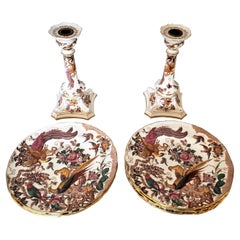
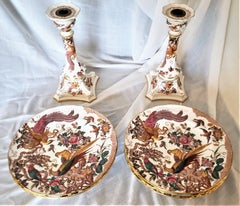
Pair of Royal Crown Derby Olde Avesbury Pattern Candlesticks & 8 Dinner Plates

Pair of Royal Crown Derby Olde Avesbury Pattern Candlesticks & 8 Dinner Plates

By Royal Crown Derby Porcelain

Located in Hamilton, Ontario

These tall candlesticks and dinner plates were made by the renowned English porcelain maker, Royal Crown Derby. The candlesticks and plates are done in their 'Olde Avesbury...

Category

Mid-20th Century English High Victorian Staffordshire Dinner Plates

Materials

Porcelain

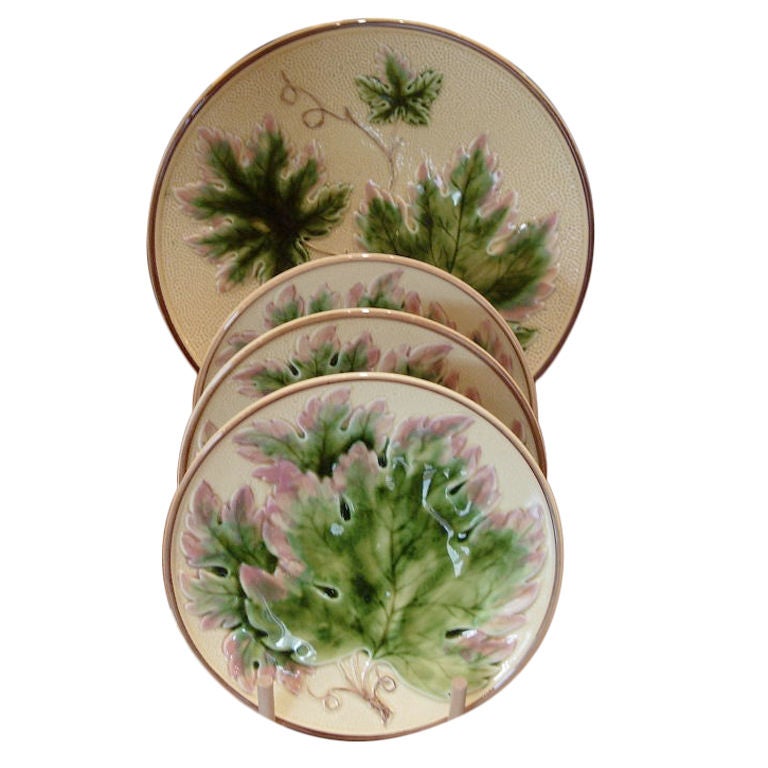
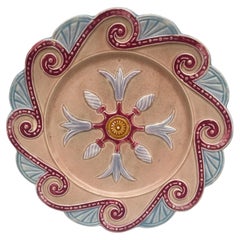
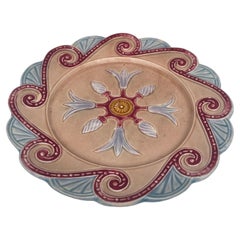
Set Of Four Majelica Plates With Leaf Decoration

Set Of Four Majelica Plates With Leaf Decoration

By Majolica Manufactory of Karlsruhe

Located in Buchanan, MI

SET OF FOUR MAJECLICA PLATES WITH LEAF DECORATION. THREE SMALER PLATES ONE SERVING PLATE Beautiful gloss, excellent vcondition

Category

19th Century American Antique Staffordshire Dinner Plates

Materials

Porcelain

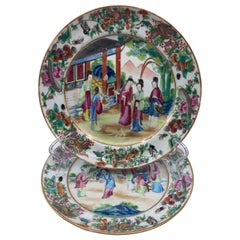
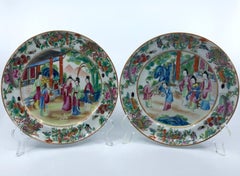
Pair of Rose Mandarin Chinese Porcelain Plates

Pair of Rose Mandarin Chinese Porcelain Plates

$1,125 / set

H 1.13 in Dm 7.88 in

Pair of Rose Mandarin Chinese Porcelain Plates

Located in New York, NY

Pair of rose Mandarin Chinese porcelain plates. Vibrantly hued and gilt painted Chinese Export luncheon plates in pinks and blues and greens. China...

Category

Early 19th Century Chinese Chinoiserie Antique Staffordshire Dinner Plates

Materials

Porcelain

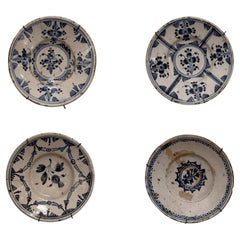
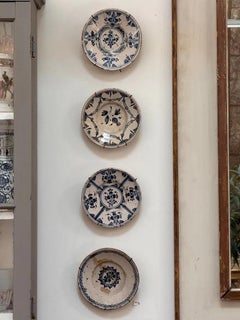
Set of Four Rare Spanish Tin-Glazed plates 18th C.

Set of Four Rare Spanish Tin-Glazed plates 18th C.

Located in Charlottesville, VA

A charming set of four, rare tin-glazed earthenware plates, Spain, Catalonia, 18th Century. Each hand-painted in cobalt blue on a cream-white ground. Size: 7.75" Diameter x 1.5" H ...

Category

18th Century Spanish Antique Staffordshire Dinner Plates

Materials

Earthenware

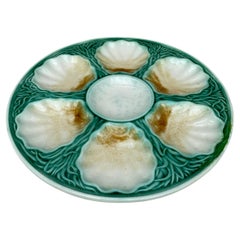
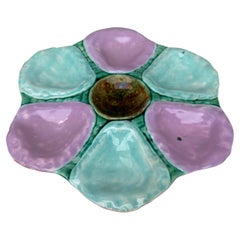
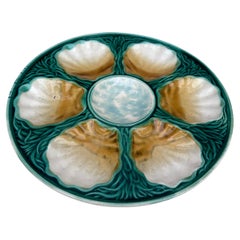
English Victorian Majolica Oyster Plate, circa 1890

English Victorian Majolica Oyster Plate, circa 1890

Located in Austin, TX

English Victorian Majolica oyster plate, circa 1890.

Category

1890s English Victorian Antique Staffordshire Dinner Plates

Materials

Ceramic

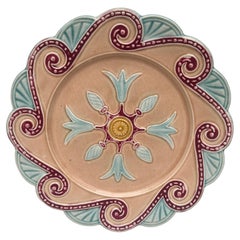
French Majolica Plate Circa 1890

French Majolica Plate Circa 1890

$300

H 8.8 in Dm 8.8 in

French Majolica Plate Circa 1890

Located in Austin, TX

French Majolica Plate Circa 1890.

Category

1890s French Rustic Antique Staffordshire Dinner Plates

Materials

Ceramic

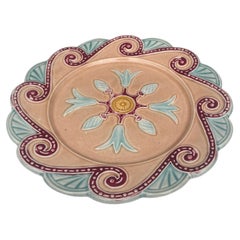
French Majolica Plate Circa 1890

French Majolica Plate Circa 1890

$300

H 0.5 in Dm 8.8 in

French Majolica Plate Circa 1890

Located in Austin, TX

French Majolica Plate Circa 1890.

Category

1890s French Rustic Antique Staffordshire Dinner Plates

Materials

Ceramic

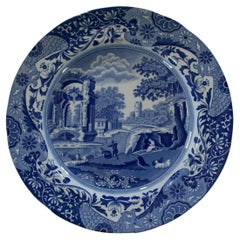
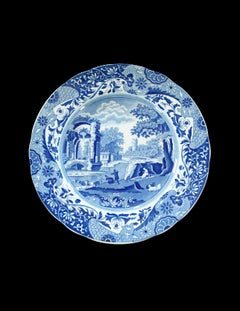
COPELAND SPODE - Blue Italian Pattern Transfer Decorated Plate - UK - Circa 1954

COPELAND SPODE - Blue Italian Pattern Transfer Decorated Plate - UK - Circa 1954

By Copeland Spode

Located in Chatham, ON

COPELAND SPODE (Manufacturer) - Blue Italian (Pattern Name) - Victorian style transfer decorated ceramic cabinet plate in blue - featuring a bucolic landscape to the center with a fl...

Category

Mid-20th Century English Victorian Staffordshire Dinner Plates

Materials

Ceramic

French Majolica Oyster Plate Salins, circa 1890

French Majolica Oyster Plate Salins, circa 1890

By Salins

Located in Austin, TX

French Majolica oyster plate with seaweeds Salins (East of France) circa 1890.  

Category

1890s French Victorian Antique Staffordshire Dinner Plates

Materials

Ceramic, Faience, Majolica

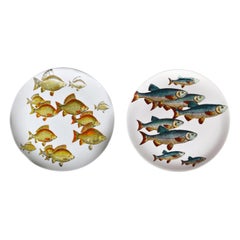
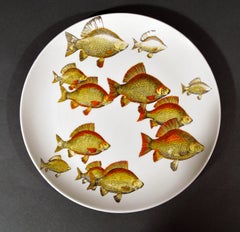
Piero Fornasetti Porcelain Fish Plates, Pesci pattern or Passage of Fish

Piero Fornasetti Porcelain Fish Plates, Pesci pattern or Passage of Fish

By Piero Fornasetti

Located in Downingtown, PA

School's In Session: Fornasetti's Enchanting "Passage of Fish" Plates Artist: Piero Fornasetti (Italian, 1913-1988) Pattern: "Pesci" or "Passage of Fish," plates numbered #2 & #3 Pe...

Category

1960s Italian Mid-Century Modern Vintage Staffordshire Dinner Plates

Materials

Porcelain

Previously Available Items
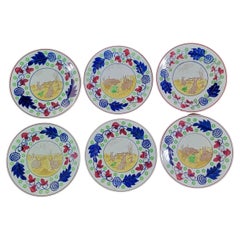
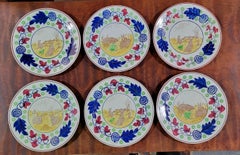
Staffordshire "Rabbitware" Dessert Plates Set 6

Staffordshire "Rabbitware" Dessert Plates Set 6

By Staffordshire

Located in Fulton, CA

A scarce set of 6 hand painted Staffordshire "Rabbitware" dessert plates. circa. 1930. Excellent original condition with very minor wear and minor crazing. Just in time for your East...

Category

Early 20th Century Staffordshire Dinner Plates

Materials

Porcelain

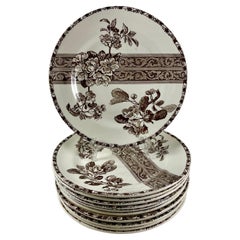
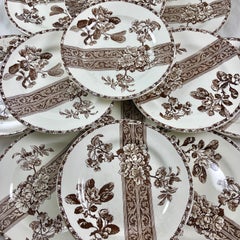
English Ironstone Sepia Transferware Aesthetic Movement Dinner Plate

English Ironstone Sepia Transferware Aesthetic Movement Dinner Plate

By Staffordshire

Located in Philadelphia, PA

Sepia colored transfer printed on white ironstone dinner plate, imported to France from England by Emile Bourgeois, circa 1880s. Multiple plates a...

Category

Late 19th Century English Aesthetic Movement Antique Staffordshire Dinner Plates

Materials

Ironstone

19th Century Blue & White English Willow Plate Staffordshire

19th Century Blue & White English Willow Plate Staffordshire

By Staffordshire

Located in Austin, TX

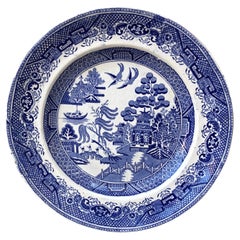
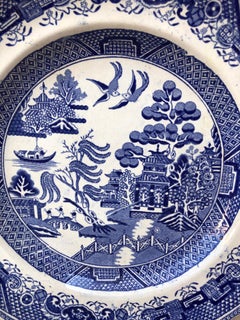
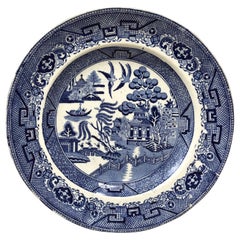
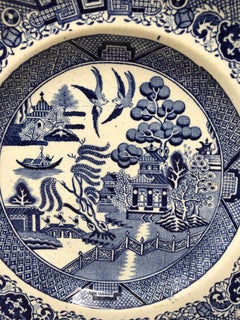
19th Century blue & white english willow plate signed Stone China D&S Staffordshire.

Category

1890s English Chinoiserie Antique Staffordshire Dinner Plates

Materials

Ceramic

Jones & Walley Blue Amaranthine Flowers English Transferware Dinner Plates, S/6

Jones & Walley Blue Amaranthine Flowers English Transferware Dinner Plates, S/6

By Staffordshire

Located in Philadelphia, PA

In the “Amaranthine Flowers” pattern, a set of six dinner plates, by Elijah Jones & Edward Walley – Hanley Cobridge Staffordshire, England - Circa 1841-1...

Category

Early 19th Century English Romantic Antique Staffordshire Dinner Plates

Materials

Earthenware

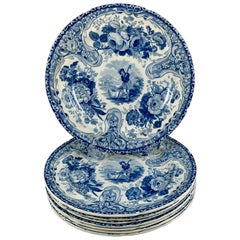
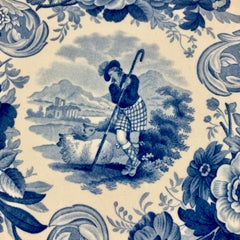
John Bagster Vignette Scottish Shepherd Blue Transferware Dinner Plates S/8

John Bagster Vignette Scottish Shepherd Blue Transferware Dinner Plates S/8

By Staffordshire

Located in Philadelphia, PA

From John Denton Bagster, a set of eight dinner plates from the “Vignette” series, Hanley, Staffordshire, England, circa 1823-1827. Often called the Scottish Shepherd, the plates show one view in a series of rural romantic scenes. The Scottish shepherd occupies a small vignette within a broad border of flowers and floral scrolls. The shepherd wears a tartan and a Tam...

Category

Early 19th Century English Romantic Antique Staffordshire Dinner Plates

Materials

Earthenware

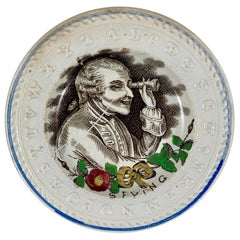
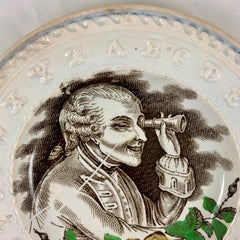
Thomas Goodwin English Staffordshire Child’s ABC Bad Manners Plate, Spying

Thomas Goodwin English Staffordshire Child’s ABC Bad Manners Plate, Spying

By Staffordshire

Located in Philadelphia, PA

An English Staffordshire child’s ABC plate by Thomas Goodwin, Canal Works, Navigation Road, Burslem, circa 1824-1854. This plate is entitled, “Spying.” It...

Category

Early 19th Century English Aesthetic Movement Antique Staffordshire Dinner Plates

Materials

Stoneware

Thomas Goodwin English Staffordshire Child’s ABC Bad Manners Plate, Laughing

Thomas Goodwin English Staffordshire Child’s ABC Bad Manners Plate, Laughing

By Staffordshire

Located in Philadelphia, PA

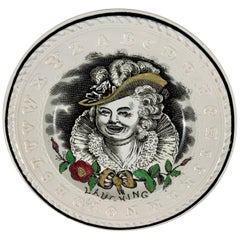
An English Staffordshire child’s ABC plate by Thomas Goodwin, Canal Works, Navigation Road, Burslem, circa 1824-1854. An extremely scarce example, one of ...

Category

Early 19th Century English Aesthetic Movement Antique Staffordshire Dinner Plates

Materials

Stoneware

Thomas Goodwin English Staffordshire Child’s ABC Bad Manners Plate, Snuffing

Thomas Goodwin English Staffordshire Child’s ABC Bad Manners Plate, Snuffing

By Staffordshire

Located in Philadelphia, PA

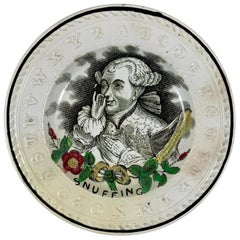
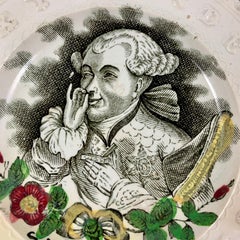
An English Staffordshire child’s ABC plate by Thomas Goodwin, Canal Works, Navigation Road, Burslem, circa 1824-1854. An extremely scarce example, one of ...

Category

Early 19th Century English Aesthetic Movement Antique Staffordshire Dinner Plates

Materials

Stoneware

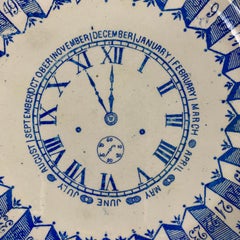
English Staffordshire Transferware Child’s ABC Clock Teaching Plate, Blue

English Staffordshire Transferware Child’s ABC Clock Teaching Plate, Blue

By Staffordshire

Located in Philadelphia, PA

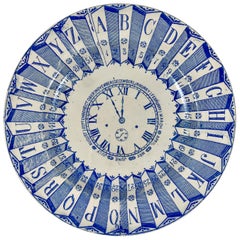
From Staffordshire, England, a children’s teaching plate, circa 1880-1900. This charming ABC plate is printed in a dimensional, geometric fan pattern, showi...

Category

1890s English Aesthetic Movement Antique Staffordshire Dinner Plates

Materials

Stoneware

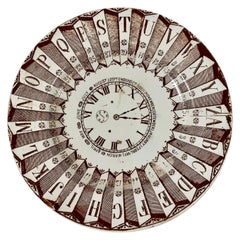
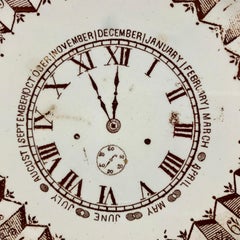
English Staffordshire Transferware Child’s ABC Clock Teaching Plate, Brown

English Staffordshire Transferware Child’s ABC Clock Teaching Plate, Brown

By Staffordshire

Located in Philadelphia, PA

From Staffordshire, England, a Children’s teaching plate, circa 1880-1900. This charming ABC plate is printed in a dimensional, geometric fan pattern, showing the entire alphabet, numbers one through fifty-two for the fifty-two weeks in a year, the twelve months of the year, and a clock face. During meal times, a child might learn his ABC’s, the calendar, and how to tell time. ABC plates...

Category

1890s English Aesthetic Movement Antique Staffordshire Dinner Plates

Materials

Stoneware

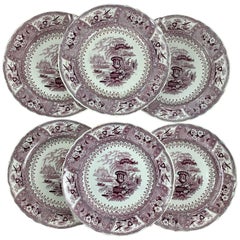
'Canova' Purple on White English Staffordshire Transferware Dinner Plates, Set/6

'Canova' Purple on White English Staffordshire Transferware Dinner Plates, Set/6

By Staffordshire

Located in Philadelphia, PA

A set of six, transfer-printed dinner plates in the ‘Canova’ pattern, made by T. Mayer in Longport, Stoke-on-Trent, Staffordshire, England, circa 1830. Mayer operated in Staffordshire from 1826-1838. A classical, romantic theme printed in the desirable purple on a white earthenware, scalloped rim plate. The central image shows an oversize urn...

Category

Early 19th Century English Georgian Antique Staffordshire Dinner Plates

Materials

Earthenware

Staffordshire dinner plates for sale on 1stDibs.

Staffordshire dinner plates are available for sale on 1stDibs. These distinctive items are frequently made of ceramic and are designed with extraordinary care. There are many options to choose from in our collection of Staffordshire dinner plates, although purple editions of this piece are particularly popular. If you’re looking for additional options, many customers also consider dinner plates by and Wedgwood. Prices for Staffordshire dinner plates can differ depending upon size, time period and other attributes — on 1stDibs, these items begin at $115 and can go as high as $200, while a piece like these, on average, fetch $158.
Questions About Staffordshire Dinner Plates
  • 1stDibs ExpertApril 5, 2022
    No. In fact, most Staffordshire figurines are not marked. Staffordshire figurines made from 1740 to the mid-1900s don’t generally have a maker’s mark, since they were produced by unknown, small manufacturers. Those manufactured by Kent between 1944 and 1962 feature a black printed mark that reads “Staffordshire Ware Kent Made in England.” Shop a collection of Staffordshire figurines from top sellers on 1stDibs.
  • 1stDibs ExpertApril 5, 2022
    Almost all Staffordshire pottery and porcelain features a potter’s mark or symbol. One of the most common varieties is the Staffordshire knot, which is a three-loop knot sometimes accompanied by initials and a crown. On 1stDibs, you’ll find a collection of vintage and contemporary Staffordshire pottery from some of the world’s top dealers.
  • 1stDibs ExpertMarch 13, 2024
    To date Staffordshire pottery, look for the maker's mark on the bottom or interior. Then, use trusted online resources to determine the maker and find out when it was active. If you need assistance, have a certified appraiser or knowledgeable antiques dealer examine your pottery. On 1stDibs, find a selection of Staffordshire pottery.
  • 1stDibs ExpertApril 5, 2022
    You can typically spot Staffordshire pottery by locating the potter’s mark or symbol. One of the most common varieties is the Staffordshire knot, which is a three-loop knot sometimes accompanied by initials and a crown. Shop a collection of vintage and contemporary Staffordshire pottery from some of the world’s top sellers on 1stDibs.
  • 1stDibs ExpertApril 5, 2022
    There are a few signs to look for to authenticate an antique Staffordshire dog figurine. Antique figurines are press molded and feature a small hole in the base, rather than a larger one. The quality of the painting is highly detailed and gilded detail may be worn a bit with age. It is always best to have a professional verify if your figurine is authentic. Shop a range of expertly vetted Staffordshire dog figures on 1stDibs.
  • 1stDibs ExpertSeptember 16, 2024
    Yes, some Staffordshire plates are worth something. Rather than a particular maker, the term Staffordshire refers to a region in the UK that is home to many manufacturers of china and porcelain wares, including Minton, Wedgwood, Royal Doulton and Moorcroft, and there is a market for certain dishes produced by many of these manufacturers. Typically, the maker, age, style, type and condition will all play a role in determining the value of a particular plate. To have your piece assessed based on these criteria, use the services of a certified appraiser or knowledgeable antique dealer. Find a selection of Staffordshire plates on 1stDibs.
  • 1stDibs ExpertOctober 15, 2024
    To know if your Staffordshire pottery is real, you have two main methods. One option is to familiarize yourself with the defining characteristics of the pieces produced by the maker of your pottery. Rather than being a single factory or workshop, Staffordshire pottery is the term for pieces made by all makers in the Staffordshire region of England. Many companies, including Wedgwood and Minton, have produced Staffordshire pottery, and the methods for authenticating pieces vary by maker. You can use the markings on your pottery to identify the maker and then consult trusted online resources for advice about authentication. Alternatively, a certified appraiser or knowledgeable antique dealer can assist you. Shop a wide variety of Staffordshire pottery on 1stDibs.
  • 1stDibs ExpertMarch 22, 2022
    To tell if Staffordshire figurines are real, turn them over. An authentic Staffordshire will have a hole in the base due to the press-molded firing technique. Also, artisans hand-painted the figurines, so no two ever show off the exact same variations in color. Staffordshire didn't add maker's marks to their pieces. If you see a name on a decorative object, it is unlikely to be authentic. Find a collection of expertly vetted Staffordshire figurines on 1stDibs.
  • 1stDibs ExpertNovember 26, 2024
    To identify Staffordshire porcelain marks, first look to see if your piece has a loosely knotted rope logo. Some items produced in Staffordshire bear this mark. Many pieces also feature a second or alternate maker's mark corresponding to the factory that produced it, such as Spode, Minton and Wedgwood. Online reference guides published on trusted websites can help you determine who made your piece based on these markings. Keep in mind that some Staffordshire porcelain is completely unmarked. If you can't locate a marking, consider having a certified appraiser or knowledgeable antique dealer assist you. Explore a wide variety of Staffordshire porcelain on 1stDibs.