Tempera Figurative Paintings

to
51
169
116
98
35
68
Overall Width
to
Overall Height
to
16
16
198
256
3
1
3
15
25
20
29
20
11
28
8
162
59
17
13
10
9
5
3
3
1
1
274
176
32
308
200
94
91
87
63
44
33
32
31
27
27
26
25
22
20
17
16
12
12
1,363
46,986
31,217
25,729
24,598
27
24
22
13
10
224
75
263
182
Medium: Tempera
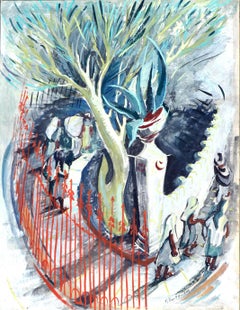
Cuernavaca Procession 1935, Figurative Landscape

Cuernavaca Procession 1935, Figurative Landscape

By Goldie Anita Powell Harding

Located in Soquel, CA

Early work of figures moving along the street in Cuernavaca to the Cathedral in Mexico by Goldie Anita Powell Harding (American, 1892-1974). Circa 1935. Tempera on Masonite. In a per...

Category

1930s American Impressionist Tempera Figurative Paintings

Materials

Masonite, Tempera

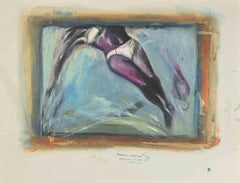
Floating Woman - Paint by Sergio Barletta - 1974

Floating Woman - Paint by Sergio Barletta - 1974

By Sergio Barletta

Located in Roma, IT

Floating Woman is a painting artwork, realized by Sergio Barletta in 1974. Tempera and white lead on cardboard. Hand-signed on the lower margin. Good conditions with foxing on t...

Category

1990s Contemporary Tempera Figurative Paintings

Materials

Tempera, Cardboard

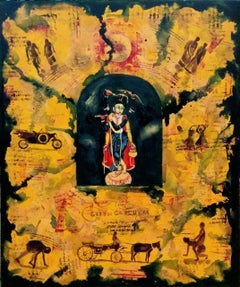
Krishna, Mythology, Acrylic, Tempera, Green, Yellow by Indian Artist "In Stock"

Krishna, Mythology, Acrylic, Tempera, Green, Yellow by Indian Artist "In Stock"

By Aditya Basak

Located in Kolkata, West Bengal

Aditya Basak - Untitled - 36 x 30 inches (unframed size) Acrylic & Tempera on Canvas ** This work will be shipped in a roll form. "Through the medium of the fantasy, Basak probes...

Category

2010s Conceptual Tempera Figurative Paintings

Materials

Canvas, Acrylic, Tempera

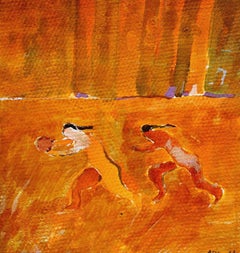
The game. 1973, paper, tempera, 19x18 cm

The game. 1973, paper, tempera, 19x18 cm

By Atis Ievins

Located in Riga, LV

Touch 1974, photo screen printing, 53x49 cm Atis Ievins (1946) The exhibition by artist Atis Ieviņš reminds the very origins of serigraphy technique in Latvian art in the time of t...

Category

1970s Contemporary Tempera Figurative Paintings

Materials

Paper, Tempera

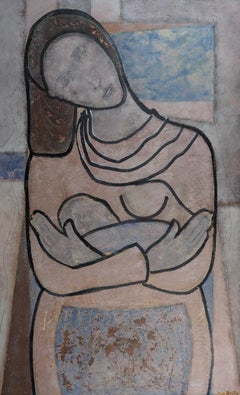
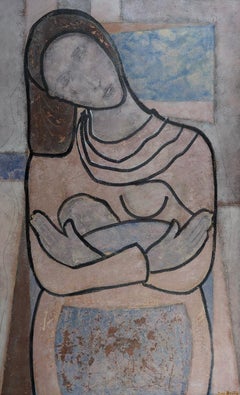
Mother With Child:  Contemporary Figurative Oil painting

Mother With Child: Contemporary Figurative Oil painting

By Sax Berlin

Located in Brecon, Powys

Few artists have mastered the use of pigments in the way that Sax Berlin has and his delicate touch with them imbues this painting with warmth and love. The dark inked lines surround...

Category

Early 2000s Contemporary Tempera Figurative Paintings

Materials

Ink, Oil, Egg Tempera

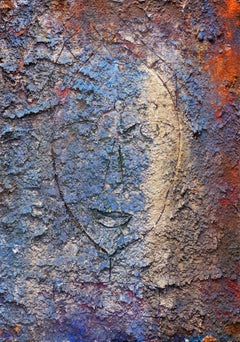
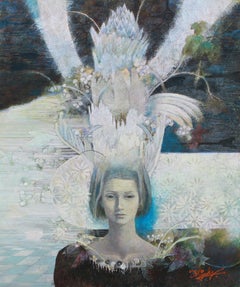
Japanese Contemporary Art by Miyuki Takanashi - Hazy Moon-Blue Memory

Japanese Contemporary Art by Miyuki Takanashi - Hazy Moon-Blue Memory

By Miyuki Takanashi

Located in Paris, IDF

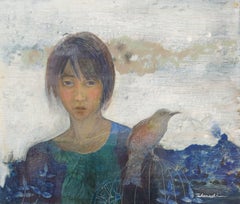
Mixed media (tempera, oil) on canvas Miyuki Takanashi is a Japanese artist born in 1961 who lives & works in Sapporo in Japan. She is graduated from Hokkaido University of Education...

Category

2010s Contemporary Tempera Figurative Paintings

Materials

Canvas, Mixed Media, Oil, Tempera

The Magician oil and tempera painting by Julio de Diego

The Magician oil and tempera painting by Julio de Diego

By Julio de Diego

Located in Hudson, NY

Julio De Diego’s Atomic Series paintings made an extraordinary statement regarding the shock and fear that accompanied the dawn of the nuclear age. In the artist’s own words, “Scientists were working secretly to develop formidable powers taken from the mysterious depths of the earth - with the power to make the earth useless! Then, the EXPLOSION! . . . we entered the Atomic Age, and from there the neo-Atomic war begins. Explosions fell everywhere and man kept on fighting, discovering he could fight without flesh.” To execute these works, De Diego developed a technique of using tempera underpainting before applying layer upon layer of pigmented oil glazes. The result is paintings with surfaces which were described as “bonelike” in quality. The forms seem to float freely, creating a three-dimensional visual effect. In the 1954 book The Modern Renaissance in American Art, author Ralph Pearson summarizes the series as “a fantastic interpretation of a weighty theme. Perhaps it is well to let fantasy and irony appear to lighten the devastating impact. By inverse action, they may in fact increase its weight.” Exhibited 1964 Marion Koogler McNay Art Institute, San Antonio, Texas This work retains its original frame which measures 54" x 42" x 2" About this artist: Julio De Diego crafted a formidable persona within the artistic developments and political struggles of his time. The artist characterized his own work as “lyrical,” explaining, “through the years, the surrealists, the social-conscious painters and the others tried to adopt me, but I went my own way, good, bad or indifferent.” [1] His independence manifested early in life when de Diego left his parent’s home in Madrid, Spain, in adolescence following his father’s attempts to curtail his artistic aspirations. At the age of fifteen he held his first exhibition, set up within a gambling casino. He managed to acquire an apprenticeship in a studio producing scenery for Madrid’s operas, but moved from behind the curtains to the stage, trying his hand at acting and performing as an extra in the Ballet Russes’ Petrouchka with Nijinsky. He spent several years in the Spanish army, including a six-month stretch in the Rif War of 1920 in Northern Africa. His artistic career pushed ahead as he set off for Paris and became familiar with modernism’s forays into abstraction, surrealism, and cubism. The artist arrived in the U.S. in 1924 and settled in Chicago two years later. He established himself with a commission for the decoration of two chapels in St. Gregory’s Church. He also worked in fashion illustration, designed magazine covers and developed a popular laundry bag for the Hotel Sherman. De Diego began exhibiting through the Art Institute of Chicago in 1929, and participated in the annual Chicago Artists Exhibitions, Annual American Exhibitions, and International Water Color Exhibitions. He held a solo exhibition at the Art Institute of Chicago in the summer of 1935. Though the artist’s career was advancing, his family life had deteriorated. In 1932 his first marriage dissolved, and the couple’s young daughter Kiriki was sent to live with friend Paul Hoffman. De Diego continued to develop his artistic vocabulary with a growing interest in Mexican art. He traveled throughout the country acquainting himself with the works of muralists such as Carlos Merida, and also began a collection of small native artifacts...

Category

1940s American Modern Tempera Figurative Paintings

Materials

Masonite, Oil, Tempera

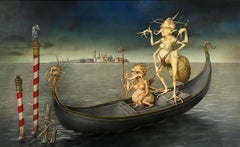
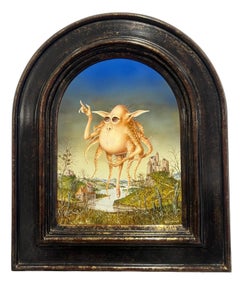
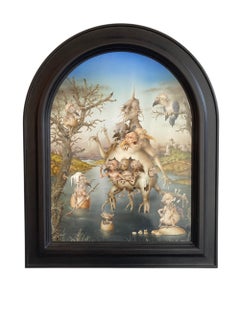
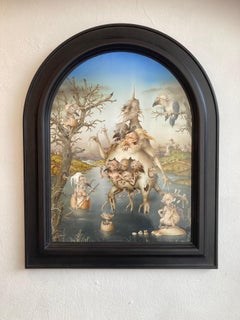
Les Oiseaux du Loch The Birds of Loch Surrealist Creature Landscape Contemporary

Les Oiseaux du Loch The Birds of Loch Surrealist Creature Landscape Contemporary

By Gérard Willemenot

Located in Utrecht, NL

Les Oiseaux du Loch The Birds of Loch Surrealist Creature Landscape Contemporary Gérard Willemenot was born on February 11, 1943. World War II and his father's deportation to Mautha...

Category

21st Century and Contemporary Surrealist Tempera Figurative Paintings

Materials

Tempera, Panel

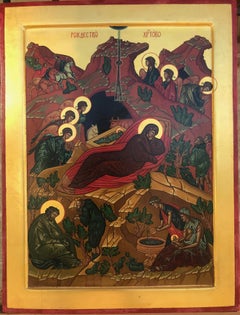
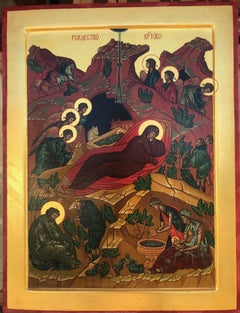
"Birth of Christ" after a Russian icon of the 15th century. Oliver Samsinger

"Birth of Christ" after a Russian icon of the 15th century. Oliver Samsinger

Located in Segovia, ES

"Birth of Christ", after a Russian icon of the 15th century. Tempera and gold leaves on gesso, wooden board. Dimensions: (H) 68 x (W) 52 x (D) 4 cm. The Nativity of Christ. This icon, created by the Viennese artist Oliver...

Category

1990s Byzantine Tempera Figurative Paintings

Materials

Gold Leaf

St. Atomic oil and tempera painting by Julio de Diego

St. Atomic oil and tempera painting by Julio de Diego

By Julio de Diego

Located in Hudson, NY

Julio De Diego’s Atomic Series paintings made an extraordinary statement regarding the shock and fear that accompanied the dawn of the nuclear age. In the artist’s own words, “Scientists were working secretly to develop formidable powers taken from the mysterious depths of the earth - with the power to make the earth useless! Then, the EXPLOSION! . . . we entered the Atomic Age, and from there the neo-Atomic war begins. Explosions fell everywhere and man kept on fighting, discovering he could fight without flesh.” To execute these works, De Diego developed a technique of using tempera underpainting before applying layer upon layer of pigmented oil glazes. The result is paintings with surfaces which were described as “bonelike” in quality. The forms seem to float freely, creating a three-dimensional visual effect. In the 1954 book The Modern Renaissance in American Art, author Ralph Pearson summarizes the series as “a fantastic interpretation of a weighty theme. Perhaps it is well to let fantasy and irony appear to lighten the devastating impact. By inverse action, they may in fact increase its weight.” Exhibited 1950 University of Illinois at Urbana "Contemporary American Painting" 1964 Marion Koogler McNay Art Institute, San Antonio, Texas This work retains its original frame which measures 54" x 36" x 2". About this artist: Julio De Diego crafted a formidable persona within the artistic developments and political struggles of his time. The artist characterized his own work as “lyrical,” explaining, “through the years, the surrealists, the social-conscious painters and the others tried to adopt me, but I went my own way, good, bad or indifferent.” [1] His independence manifested early in life when de Diego left his parent’s home in Madrid, Spain, in adolescence following his father’s attempts to curtail his artistic aspirations. At the age of fifteen he held his first exhibition, set up within a gambling casino. He managed to acquire an apprenticeship in a studio producing scenery for Madrid’s operas, but moved from behind the curtains to the stage, trying his hand at acting and performing as an extra in the Ballet Russes’ Petrouchka with Nijinsky. He spent several years in the Spanish army, including a six-month stretch in the Rif War of 1920 in Northern Africa. His artistic career pushed ahead as he set off for Paris and became familiar with modernism’s forays into abstraction, surrealism, and cubism. The artist arrived in the U.S. in 1924 and settled in Chicago two years later. He established himself with a commission for the decoration of two chapels in St. Gregory’s Church. He also worked in fashion illustration, designed magazine covers and developed a popular laundry bag for the Hotel Sherman. De Diego began exhibiting through the Art Institute of Chicago in 1929, and participated in the annual Chicago Artists Exhibitions, Annual American Exhibitions, and International Water Color Exhibitions. He held a solo exhibition at the Art Institute of Chicago in the summer of 1935. Though the artist’s career was advancing, his family life had deteriorated. In 1932 his first marriage dissolved, and the couple’s young daughter Kiriki was sent to live with friend Paul Hoffman. De Diego continued to develop his artistic vocabulary with a growing interest in Mexican art. He traveled throughout the country acquainting himself with the works of muralists such as Carlos Merida, and also began a collection of small native artifacts...

Category

1940s American Modern Tempera Figurative Paintings

Materials

Masonite, Oil, Tempera

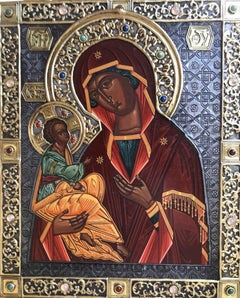
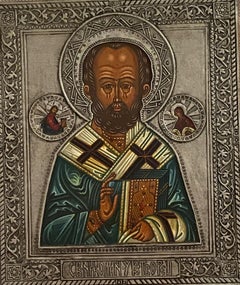
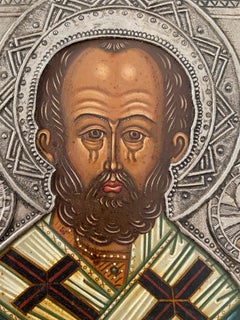
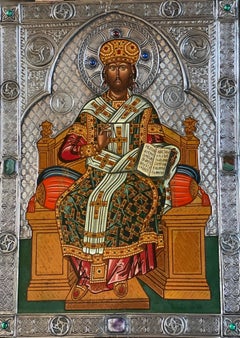
Saint Nicolas in the style of Russian icons of the 18th century. With Oklad

Saint Nicolas in the style of Russian icons of the 18th century. With Oklad

Located in Segovia, ES

Icono of Saint Nicolas in the style of Russian icons of the 18th century. Egg tempera and gesso on wood, covered by a metal oklad made by the artist himself. The oklad, in principle, were made to cover damaged parts of highly revered ancient icons...

Category

1990s Byzantine Tempera Figurative Paintings

Materials

Gesso, Wood, Egg Tempera

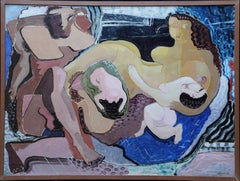
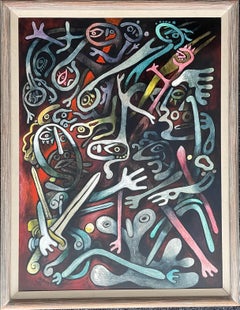
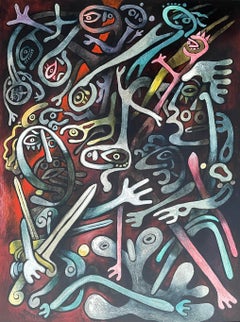
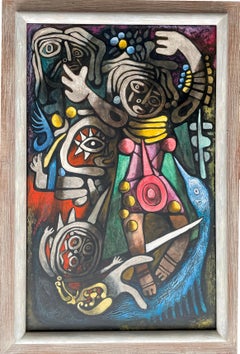
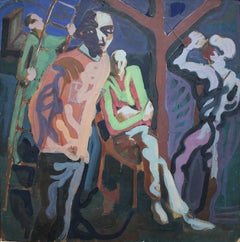
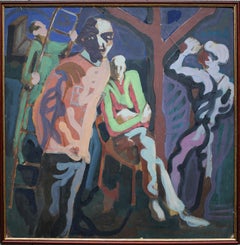
In work/Four figures. Double-sided, cardboard, tempera, 56x47 cm

In work/Four figures. Double-sided, cardboard, tempera, 56x47 cm

By Vladimir Glushenkov

Located in Riga, LV

In work/Four figures. Double-sided, cardboard, tempera, 56x47 cm Vladimir Borisovich Glushenkov (May 21, 1948, Riga - December 26, 2009, Riga.) - painter, graphic artist, poet, translator. Born in Riga in a Russian-Polish-German family. Vladimir Glushenkov...

Category

1970s Surrealist Tempera Figurative Paintings

Materials

Mixed Media, Cardboard, Tempera

Le Badaud Mouche Tempera on Panel Surrealism Contemporary In Stock

Le Badaud Mouche Tempera on Panel Surrealism Contemporary In Stock

By Gérard Willemenot

Located in Utrecht, NL

Le Badaud Mouche Tempera on Panel Surrealism Contemporary In Stock Gérard Willemenot (1943, Paris, France) graduated as an architect at the School of Art in Paris. After working asa...

Category

21st Century and Contemporary Contemporary Tempera Figurative Paintings

Materials

Tempera, Panel

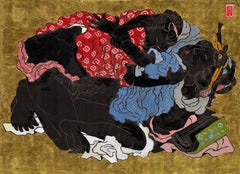
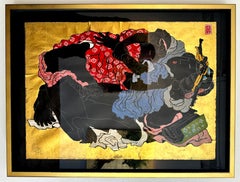
Shunga I - Contemporary Erotic Gold Leaf Painting with Japanese Influence

Shunga I - Contemporary Erotic Gold Leaf Painting with Japanese Influence

By Konstantinos Papamichalopoulos

Located in Dallas, TX

Blending Japanese ukiyo-e influences with contemporary figurative abstraction, Shunga I by Greek artist Konstantinos Papamichalopoulos is a visually arresting work that explores inti...

Category

2010s Contemporary Tempera Figurative Paintings

Materials

Gold Leaf

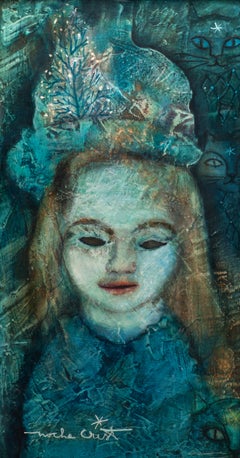
Girl with Cat
Girl with Cat

Girl with Cat

By Noche Crist 1

Located in Washington, DC

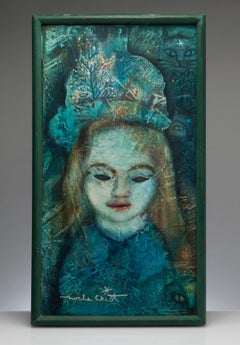
One of a kind painting by Noche Crist (1909- 2004). Noche Crist was an American artist born in Romania. Painting is made with casein on plaster on wood. Catalogue of a postumous ret...

Category

1960s Outsider Art Tempera Figurative Paintings

Materials

Plaster, Wood, Casein

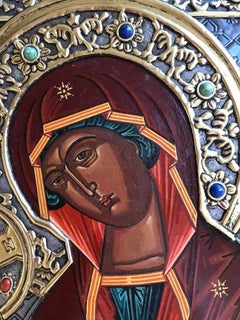
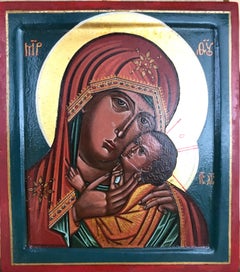
Icon of  The Holy Virgin of  Tenderness (Korsunskaya).

Icon of The Holy Virgin of Tenderness (Korsunskaya).

Located in Segovia, ES

Icon of THE KORSUN VIRGIN (KORSUNSKAYA), egg tempera, and gold leave on gesso, over a piece of wood. Dimensions: (H) 26.5 x (W) 23.5 x (D) 3 cm. Also called The Holy Virgin of Tenderness, represents the Mother of God and infant Christ in a tender cheek-to-cheek embrace. The Virgin's hands tenderly surround the head and hands of the Child Jesus while he takes the cloak of the Mother of God with his left hand and plays with the fingers of his right hand, between his mother's neck and his own. Two very old icons, from the 12th and 13th Centuries, painted on the same theme, are respectively in the Uspenskii Cathedral in Moscow and in the Russian Museum in St. Petersburg. This is how the artist sums up the technique used by him to create the icon: “The aim of these steps is to create a durable painting. The icon is eternal. The first step is to choose a support, traditionally made of wood, from the center of the trunk to avoid warping it. For this purpose, two hardwood bolts were often used on the back to give the picture panel additional stability. Often a frame is milled out. Then the image carrier is sanded smooth and now 12 or 14 thin layers of gesso are applied and sanded smooth as well. Then the preliminary drawing is applied and the drawing board is prepared with a special preparation called bolus. This bolus can be polished to a high gloss. Afterward, the gold leaf is "shot" with special brushes. It dries up within a few hours and can now be polished with agate. Gold leaf is real 24-carat gold. Now, the actual process of painting begins. Egg tempera is made fresh from egg yolk, water and a little vinegar. This is used to prepare the color pigments. Tempera painting is done in numerous layers from dark to light. When the icon is finished, it is left to dry for a few months and varnished with a special varnish called Olifa made from boiled linseed oil and other ingredients”. ABOUT THE ARTIST Oliver Samsinger...

Category

1990s Byzantine Tempera Figurative Paintings

Materials

Gold Leaf

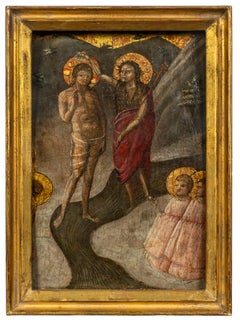
Baptism of Christ
Baptism of Christ

Baptism of Christ

Located in New York, NY

Provenance: Achillito Chiesa, Milan Luigi Albrighi, Florence, by 1 July 1955 with Marcello and Carlo Sestieri, Rome, 1969 Private Collection, Connecticut Exhibited: Mount Holyoke College Art Museum, South Hadley, Massachusetts (on loan, 2012) Literature: Carlo Volpe, “Alcune restituzioni al Maestro dei Santi Quirico e Giulitta,” in Quaderni di Emblema 2: Miscellanea di Bonsanti, Fahy, Francisci, Gardner, Mortari, Sestieri, Volpe, Zeri, Bergamo, 1973, pp. 19-20, fig. 18, as by the Master of Saints Quiricus and Julitta (now identified as Borghese di Piero). This fine predella panel depicting the Baptism...

Category

15th Century and Earlier Old Masters Tempera Figurative Paintings

Materials

Tempera, Wood Panel

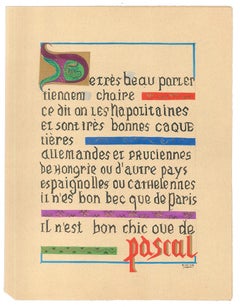
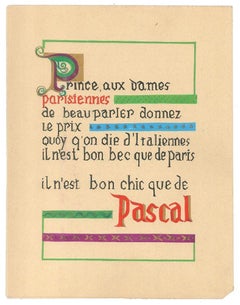
Prince - Original Ink and Tempera on Paper by Esy Beluzzi - 1956

Prince - Original Ink and Tempera on Paper by Esy Beluzzi - 1956

By Esy Beluzzi

Located in Roma, IT

Image dimensions: 23.5 x 17 cm. Prince is an original artwork realized by Esy Beluzzi in 1956 Original painting on paper. Hand-signed and dated in blue pen on the lower right corner: Esy 56. Mint conditions. Beautiful artwork presenting the incipit of a story. The writing, similar to an ancient...

Category

1950s Contemporary Tempera Figurative Paintings

Materials

Tempera

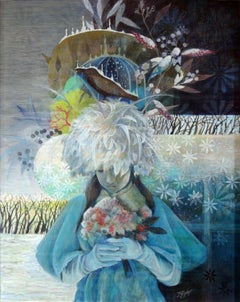
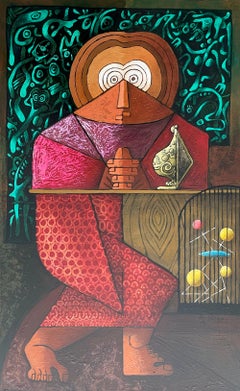
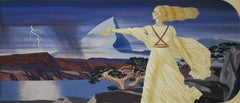
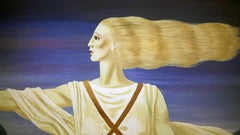
Art Deco Woman in Classical Robes set in  Stylized Landscape

Art Deco Woman in Classical Robes set in Stylized Landscape

Located in Miami, FL

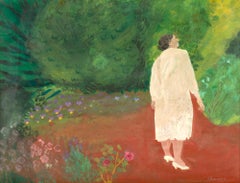
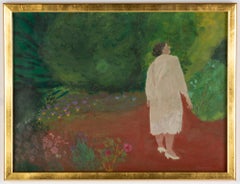
Woman in Surreal Landscape Illustration Published: Woman's Home Companion December 1939, "How to Pray" By Ralph Sadler Meadowcroft Work is Unframed

Category

1930s Art Deco Tempera Figurative Paintings

Materials

Tempera

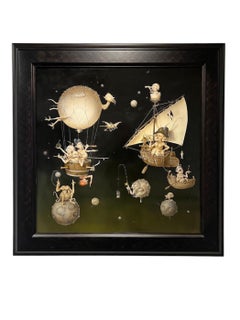
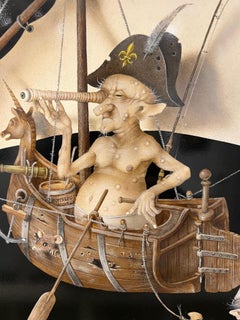
La Conquête du Ciel Conquest of the Skies Surrealism Contemporary Space Creature

La Conquête du Ciel Conquest of the Skies Surrealism Contemporary Space Creature

By Gérard Willemenot

Located in Utrecht, NL

La Conquête du Ciel Conquest of the Skies Surrealism Contemporary Space Creature Gérard Willemenot was born on February 11, 1943. World War II and his father's deportation to Mautha...

Category

21st Century and Contemporary Surrealist Tempera Figurative Paintings

Materials

Panel, Tempera

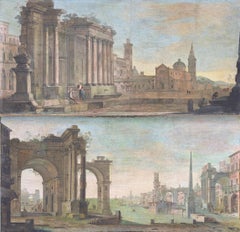
Pair of Italian 18th Century Tempera on Canvas Classical Paintings "Capriccio"

Pair of Italian 18th Century Tempera on Canvas Classical Paintings "Capriccio"

By Pietro Paltronieri

Located in Rome, IT

A fine pair of huge Italian 18' century Capriccio with Classical ruins, tempera oil on canvas . Atr.Pietro Paltronieri, il Mirandolese (Mirandola 1673-1741 Bologna). Measurements ...

Category

Mid-18th Century Old Masters Tempera Figurative Paintings

Materials

Tempera

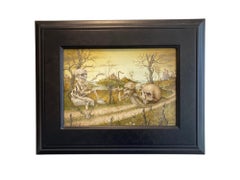
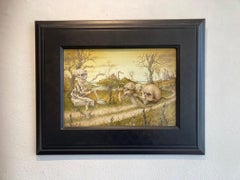
L'Auto-Stoppeur Surrealism Landscape Skeleton Skull Contemporary

L'Auto-Stoppeur Surrealism Landscape Skeleton Skull Contemporary

By Gérard Willemenot

Located in Utrecht, NL

L'Auto-Stoppeur Surrealism Landscape Skeleton Skull Contemporary Gérard Willemenot was born on February 11, 1943. World War II and his father's deportation to Mauthausen had a profo...

Category

21st Century and Contemporary Surrealist Tempera Figurative Paintings

Materials

Tempera, Panel

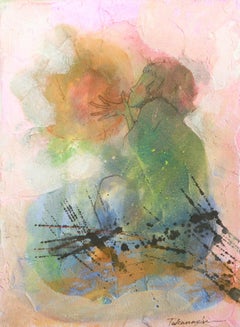
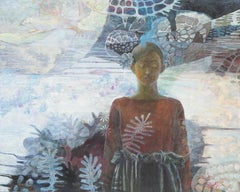
Japanese Contemporary Art by Miyuki Takanashi - The Day to go to the Forest

Japanese Contemporary Art by Miyuki Takanashi - The Day to go to the Forest

By Miyuki Takanashi

Located in Paris, IDF

Mixed media (tempera, oil) on canvas Miyuki Takanashi is a Japanese artist born in 1961 who lives & works in Sapporo in Japan. She is graduated from Hokkaido University of Educa...

Category

2010s Contemporary Tempera Figurative Paintings

Materials

Canvas, Mixed Media, Oil, Tempera

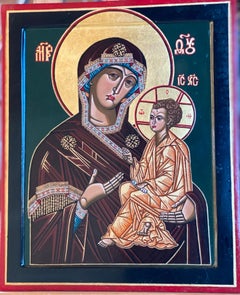
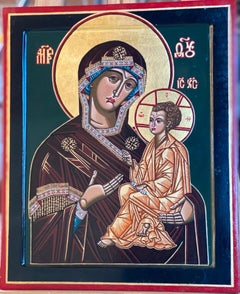
The Virgin of Tijvin (after a Russian Icon in the style of the 18th century).

The Virgin of Tijvin (after a Russian Icon in the style of the 18th century).

Located in Segovia, ES

The Virgin of Tijvin (after a Russian icon in the style of the 18th Century). Egg tempera and gold leaf on gesso over wood. Measurements in centimeters: 45 x 36.5 x 3 cm / In inch...

Category

1990s Byzantine Tempera Figurative Paintings

Materials

Gold Leaf

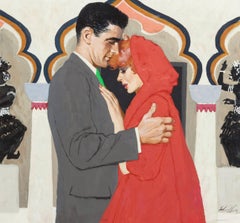
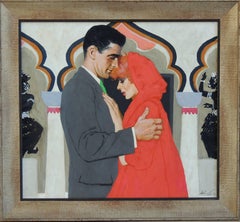
Consoling Her, Magazine Story Illustration

Consoling Her, Magazine Story Illustration

By Jim Schaeffing

Located in Fort Washington, PA

Medium: Gouache and Tempera on Board Dimensions: 16.00" x 16.00" Signature: Signed Lower Right

Category

20th Century Tempera Figurative Paintings

Materials

Tempera, Gouache, Board

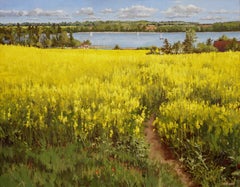
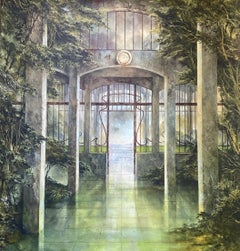
La Piscine de mon Rêve Landscape Tempera Painting on Linen Canvas In Stock

La Piscine de mon Rêve Landscape Tempera Painting on Linen Canvas In Stock

By Paul Delmée

Located in Utrecht, NL

La Piscine de mon Rêve Swimming Pool of my Dream Landscape Tempera Painting on Linen Canvas In Stock Paul Delmée (Brussels, 1944) received his education at the Academie des Beaux Art...

Category

21st Century and Contemporary Contemporary Tempera Figurative Paintings

Materials

Canvas, Linen, Tempera

La Globule The Blood Cell Tempera on Panel Painting Surrealism In Stock

La Globule The Blood Cell Tempera on Panel Painting Surrealism In Stock

By Gérard Willemenot

Located in Utrecht, NL

La Globule The Blood Cell Tempera on Panel Painting Surrealism In Stock Gérard Willemenot (1943, Paris, France) graduated as an architect at the School of Art in Paris. After working...

Category

21st Century and Contemporary Contemporary Tempera Figurative Paintings

Materials

Tempera, Panel

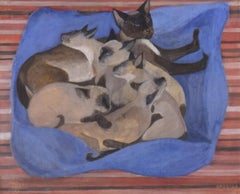
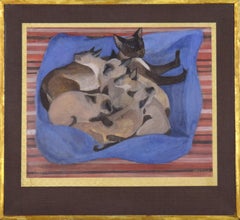
Siamese Cat with Kittens by Orovida Pissarro - Egg tempura painting

Siamese Cat with Kittens by Orovida Pissarro - Egg tempura painting

By Orovida Pissarro

Located in London, GB

Siamese Cat with Kittens by Orovida Pissarro (1893-1968) Egg tempera on linen 39 x 48 cm (15³/₈ x 18⁷/₈ inches) Signed lower right Orovida and dated lower left 1934 Provenance J Ankri, 8th October 1967 Literature K L Erickson, Orovida Pissarro: Painter and Print-Maker with A Catalogue Raisonné of Paintings, (doctoral thesis), Oxford, 1992, Appendices, no. 51, p. 56 (illustrated) Exhibition London, The Leicester Galleries, Paintings by Orovida, February 1935, no. 6 Women’s International Art Club, 20th February - 13th March 1937, no. 273 London, Redfern Gallery, Ten Years of Work by Orovida, 5th-28th May 1938, no. 7 London, The Royal Society of British Artists, Summer Exhibition, 1947, no. 281 (possibly the etching) London, O’Hana Gallery, Paintings, Drawings and Coloured Etchings: Orovida, 3rd-18th October 1957, no. 13 Artist biography Orovida Camille Pissarro, Lucien and Esther Pissarro’s only child, was the first woman in the Pissarro family as well as the first of her generation to become an artist. Born in Epping, England in 1893, she lived and worked predominantly in London where she became a prominent member of several British arts clubs and societies. She first learned to paint in the Impressionist style of her father, but after a brief period of formal study with Walter Sickert in 1913 she renounced formal art schooling. Throughout her career, Orovida always remained outside of any mainstream British art movements. Much to Lucien's disappointment she soon turned away from naturalistic painting and developed her own unusual style combining elements of Japanese, Chinese, Persian and Indian art. Her rejection of Impressionism, which for the Pissarro family had become a way of life, together with the simultaneous decision to drop her famous last name and simply use Orovida as a ‘nom de peintre’, reflected a deep desire for independence and distance from the weight of the family legacy. Orovida's most distinctive and notable works were produced from the period of 1919 to 1939 using her own homemade egg tempera applied in thin, delicate washes to silk, linen or paper and sometimes embellished with brocade borders. These elegant and richly decorative works generally depict Eastern, Asian and African subjects, such as Mongolian horse...

Category

1930s Modern Tempera Figurative Paintings

Materials

Linen, Egg Tempera
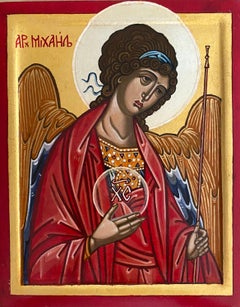
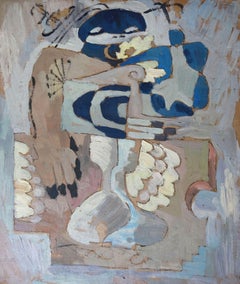
Mechanical mask. Cardboard, tempera, 56x47 cm

Mechanical mask. Cardboard, tempera, 56x47 cm

By Vladimir Glushenkov

Located in Riga, LV

Mechanical mask. Cardboard, tempera, 56x47 cm Vladimir Borisovich Glushenkov (May 21, 1948, Riga - December 26, 2009, Riga.) - painter, graphic artist, poet, translator. Born in Ri...

Category

1970s Impressionist Tempera Figurative Paintings
Materials

Tempera, Cardboard

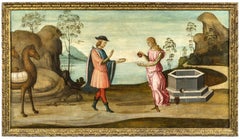
Rebecca at the Well

Rebecca at the Well

Located in New York, NY

Provenance: Dr. James Henry Lancashire, Manchester-by-the-Sea, Massachusetts, by 1925; probably by descent to: Private Collection, Cumberland Foreside, Maine, until 2018 This unpublished panel is a characteristic work of the Master of the Apollo and Daphne Legend, an anonymous Florentine painter in the circle of Bartolommeo di Giovanni, Domenico Ghirlandaio, and Sandro Botticelli. The artistic personality of the Master of the Apollo and Daphne Legend was independently recognized by Everett Fahy and Federico Zeri at roughly the same moment in time. Fahy originally dubbed this artist the Master of the Ryerson Panels but later adopted Zeri’s name for the artist, which derives from his eponymous works from the Samuel H. Kress collection (Figs. 1-2). Fahy posited that the artist was most likely a pupil of Ghirlandaio active from roughly 1480 to 1510, and that he may be identifiable with one of Ghirlandaio’s documented pupils to whom no works have been securely attributed, such as Niccolò Cieco, Jacopo dell’Indaco, or Baldino Baldinetti. The present painting was first attributed to this master by Everett Fahy in 1989, who became aware of its existence only after publishing his definitive studies on the artist. The surviving body of work by the Master of the Apollo and Daphne Legend is largely composed of series of panels treating the same theme. In addition to the works illustrating the legend of Apollo and Daphne, there are also series on the themes of Susanna and the Elders and the story of Saint Joseph, among others. The subject of the present panel is drawn from Genesis 24, the story of Isaac. It is possible that our painting relates to another work by the artist depicting the Sacrifice of Isaac formerly in the collection of E. A. McGuire in Dublin, Ireland (Fig. 3), and that these two panels were originally part of a decorative scheme based on the story of Isaac. Although the Master’s paintings of this type have traditionally been considered painted fronts of wedding chests, known as cassoni, the scale of these paintings and the fact that they are often part of a series indicates that they are more likely spalliera panels—paintings set into furniture or the wainscoting of a room. The biblical episode depicted in this painting centers on the theme of marriage, which suggests that this work was likely commissioned for the domestic interior of a newly married couple. The Master has transcribed into paint even the minute details of this Old Testament story, in which Abraham sends a servant to travel by camel to the land of his father and seek out a wife for his son Isaac. The servant is here shown at the well...

Category

15th Century and Earlier Old Masters Tempera Figurative Paintings
Materials

Oil, Tempera, Wood Panel

Tempera figurative paintings for sale on 1stDibs.
Find a wide variety of authentic Tempera figurative paintings available on 1stDibs. While artists have worked in this medium across a range of time periods, art made with this material during the 21st Century is especially popular. If you’re looking to add figurative paintings created with this material to introduce a provocative pop of color and texture to an otherwise neutral space in your home, the works available on 1stDibs include elements of blue, orange, purple, yellow and other colors. There are many well-known artists whose body of work includes ceramic sculptures. Popular artists on 1stDibs associated with pieces like this include Miyuki Takanashi, Sergio Barletta, Alkis Matheos, and Barnaby Fitzgerald. Frequently made by artists working in the Contemporary, Modern, all of these pieces for sale are unique and many will draw the attention of guests in your home. Not every interior allows for large Tempera figurative paintings, so small editions measuring 0.1 inches across are also available